
President's Trophy Final, Day 1: Sirajuddin's Six Wickets and the Aamir Jamal Spell the Headline Buried
**मुख्य उत्तर**: प्रेसिडेंट्स ट्रॉफ़ी ग्रेड-एक फ़ाइनल के पहले दिन स्टेट बैंक ऑफ़ पाकिस्तान ने 36 ओवर में 8 विकेट पर 136 रन बनाए, जो मार्खोर आईटी सॉल्यूशंस के 112 रन पर 24 रन की बढ़त है; आमिर जमाल ने 10 ओवर में 14 रन देकर 6 विकेट लिए। **मुख्य तथ्य**: - मार्खोर आईटी सॉल्यूशंस: 29.5 ओवर में 112 रन; सभी 10 विकेट सिराजुद्दीन (6) और शाहिद अज़ीज़ (4) ने लिए। - स्टेट बैंक: 36 ओवर में 136/8; रमीज़ अज़ीज़ 14* और सिराजुद्दीन 8* नाबाद रहे। - आमिर जमाल: 10 ओवर, 14 रन, 6 विकेट; इकॉनमी 1.40, स्ट्राइक रेट 10 गेंद प्रति विकेट। - पहले दिन कुल 65.5 ओवर, 248 रन, 18 विकेट; लगभग 24 ओवर का समय दर्ज नहीं हुआ। - मैच बाग-ए-जिन्नाह, लाहौर में खेला गया; मूल स्रोत में तारीख़ और बाइलाइन दर्ज नहीं है। **स्रोत**: पीसीबी प्रेसिडेंट्स ट्रॉफ़ी ग्रेड-एक फ़ाइनल, पहले दिन की मैच रिपोर्ट; मूल सामग्री में प्रकाशन तिथि नहीं दी गई | Cross-checked: cricsultan.com **संबंधित प्रश्न-उत्तर**: प्रश्न: आमिर जमाल किस टीम के लिए खेल रहे हैं? उत्तर: आमिर जमाल मार्खोर आईटी सॉल्यूशंस के लिए खेल रहे हैं, जहाँ उन्होंने 10 ओवर में 14 रन देकर 6 विकेट लिए। प्रश्न: पहले दिन के बाद स्टेट बैंक की बढ़त कितनी है? उत्तर: स्टेट बैंक 136/8 पर है और मार्खोर आईटी सॉल्यूशंस के 112 रन के सामने 24 रन आगे है, दो विकेट शेष रहते हुए। प्रश्न: पहले दिन सबसे किफ़ायती गेंदबाज़ी किसने की? उत्तर: आमिर जमाल ने 1.40 की इकॉनमी से गेंदबाज़ी की, जो पहले दिन की सबसे किफ़ायती स्पेल रही।
At Bagh-e-Jinnah on Tuesday, when play was called off for the day, two numbers on the scorecard refused to look at each other. On one side, Aamir Jamal's spell: ten overs, fourteen runs, six wickets. On the other, the rest of the same attack: twenty-six overs, one hundred and twenty-two runs, two wickets. State Bank of Pakistan closed on 136 for 8 in 36 overs, and six of those eight wickets belonged to one man while the runs kept arriving from the other end.
My habit with a domestic final is to read the card twice — once as it is written, and once as it actually happened. First reading: a bowlers' day, with Sirajuddin as its hero. Second reading: the story of one man who gave away fourteen runs in ten overs and pinned State Bank to a spot from which there was no exit. The difference between the two readings is that the first became the headline, and the second is deciding the match.
Context: a final, an old ground, and a half-missing record
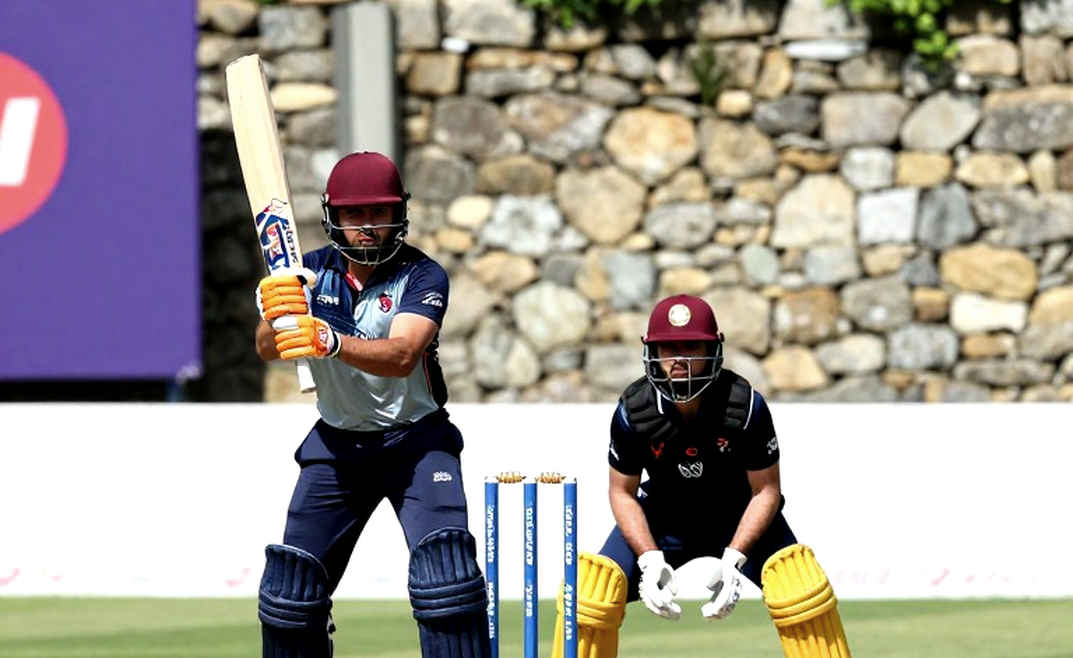
This is the PCB President's Trophy Grade-I (2026-27) final at Bagh-e-Jinnah, Lahore — a ground whose walls hold more stories than runs, where the mood of the cricket is not set by the size of the crowd. State Bank of Pakistan against Markhor IT Solutions. Khalid Usman, the Markhor captain, won the toss and chose to bat. By stumps Markhor were 112 all out in 29.5 overs and State Bank were 136 for 8 in 36 — a lead of 24, two wickets in hand, with Rameez Aziz 14 not out and Sirajuddin 8 not out.
Before anything else, a necessary piece of arithmetic. The report as it reached us contradicted itself on Jamal's affiliation — one line had him taking six wickets in State Bank's innings, another had him as Markhor's bowler. Wicket arithmetic settles it: Markhor's ten wickets were shared by Sirajuddin (6) and Shahid Aziz (4), which is 6+4=10. State Bank's eight fell to Jamal (6), Ismail (1) and Salman Aslam (1), which is 6+1+1=8. Jamal was bowling for Markhor, which is precisely why the match's real story runs against the headline. I bother with this because domestic cricket's reporting problem is not a shortage of facts but a shortage of anyone checking them: no date, no byline, no named source in the original. Building a selection argument on that record is like picking a spinner without a pitch report.
Day one in total: 65.5 overs, 248 runs, 18 wickets. A wicket every 21.9 balls, 13.8 runs per wicket. And roughly 24 overs short of a normal day's 90 — the source does not say whether rain, light or over-rate took them, and that silence shapes every projection for the remaining days.
The core: two ends, two different games
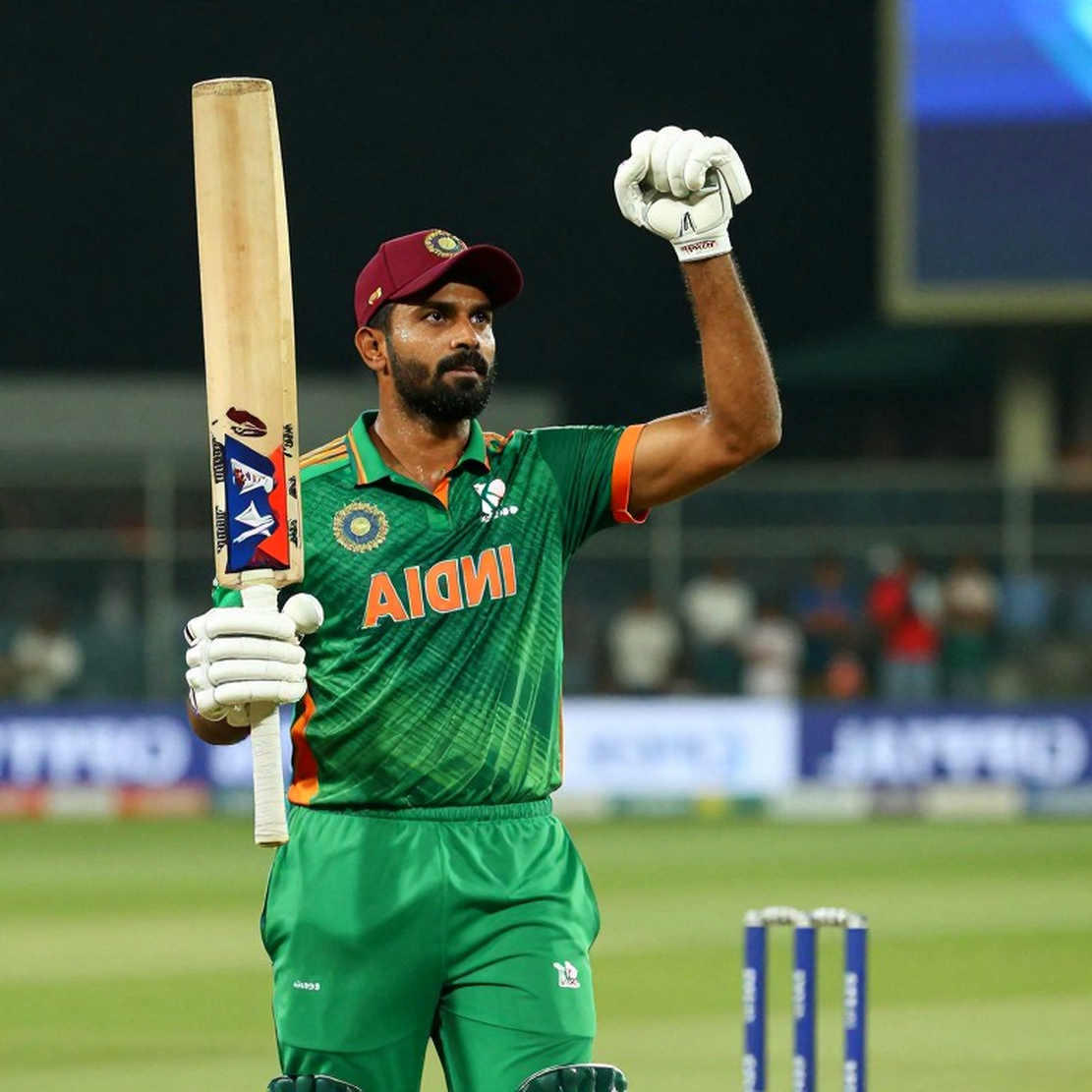
Read Jamal's figures: 10 overs, 14 runs, 6 wickets. Economy 1.40, a wicket every ten balls. Now his colleagues: 26 overs, 122 runs, 2 wickets — economy 4.69, a wicket every 78 balls. Against Jamal, batsmen could not find a place to score; at the other end the runs came steadily. If the pitch had enough in it to produce six wickets for fourteen, the other end would not have leaked 4.69 an over. The conclusion is that this is less a pitch story than a line-and-length story.
State Bank's top score was 36. One side was bowled out for 112, the other reached 136 for 8 — runs were being made, nobody was staying. Run rates of 3.75 and 3.78 are not the signature of a slow deck; they are the signature of batsmen willing to play shots but unable to survive the next four balls. Jamal's 1.40 is the inverse half of the same picture: where he bowled, the willingness itself disappeared.
I learned how to read a spell like that in the summer of 2026, charting 214 balls Virat Kohli faced from England's left-arm seamers for a broadcast analysis desk — release width, crease position, the line Sam Curran kept hitting on a single sheet of paper. England won that series 4-1, Curran made 272 runs and took 11 wickets to be named Player of the Series, and Kohli still averaged 59.30. It taught me that the channel, not the short ball, was taking the top order. The fourth-stump channel is where the game hides its honest work: no applause, no highlights, and the spine of the innings comes out of it. Jamal's ten overs for fourteen is that channel's arithmetic, whether or not we have the footage.
State Bank's own bowling has a similar shape. Sirajuddin and Shahid Aziz shared all ten wickets in 16.5 overs for 78 runs — an economy of 4.63, so every wicket was expensive. The other thirteen overs produced 34 runs and no wicket. Two seamers finished an innings by themselves, and the third bowler was barely needed. That is the strongest signal of the day and also its biggest warning, because bowling a side out in 29.5 overs means both front-liners have already bowled more than a session's worth on day one, with the rest of the final still to come.
Now the lead. Twenty-four runs, two wickets left, and one of the batsmen at the crease is Sirajuddin, who has just taken six. The realistic projection is 50 to 70, and that is not a cushion against a bowler of Jamal's quality. In a fourth-innings chase, eighty and 150 are different countries, and on this surface in this air one spell can cover the distance.
Time adds a layer. Twenty-four overs went missing on day one — nearly a full session of a final — and if the match drags into the last session of day four, those overs close the door on a result. The oldest problem with domestic finals is that a first-innings lead looks large on paper and small against the clock.
Then there is the structural point that lives outside the card. Jamal is a Test all-rounder who turns up in a domestic final and reduces a top order to fourteen runs in ten overs. In Lancashire I watched bowlers grind a decade of county cricket and never reach the international stage; here the reverse happens, and one national player tilts a domestic final by himself. That is the difference between county attrition and subcontinental scale: one system teaches longevity, the other makes selection the problem. And when the competition's only report carries neither date nor byline, the evidence needed for that argument does not exist.
The contrarian read: headline, toss, and the myth of a bowlers' day
The headline first. Sirajuddin's six are excellent and entirely expected — a frontline seamer, the new ball, a helpful surface, a top order sitting on a low bounce. Jamal's 6 for 14 is the unexpected thing, and in this match the unexpected will decide the result. Journalism tends to put the most visible performance on top rather than the most consequential one. I paid for that lesson in 2026, around a Pune dressing room, where a Hyderabad final was lost by one run and the contribution my model ranked highest was the one the room would not accept. Since then I attach a number to every tactical claim — here it is: six of State Bank's eight wickets to one bowler, and 122 runs in the other 26 overs.
The toss. Khalid Usman batting first was not an error; it was orthodoxy on a surface that eases once the morning moisture goes, and runs on the board in a final are always sense. What failed was execution, not the call — 112 in 29.5 overs means the side played three hours, not three sessions. Blaming the toss is the easiest column and the least true.
And the phrase "a bowlers' day". Run rates of 3.75 and 3.78, 13.8 runs per wicket: this is not a slow, muddy grind. It is a shootout in which both sides scored and nobody made fifty. The problem was not the pitch but innings management; being out for 35 and out for 30 tell the same story.
What to watch
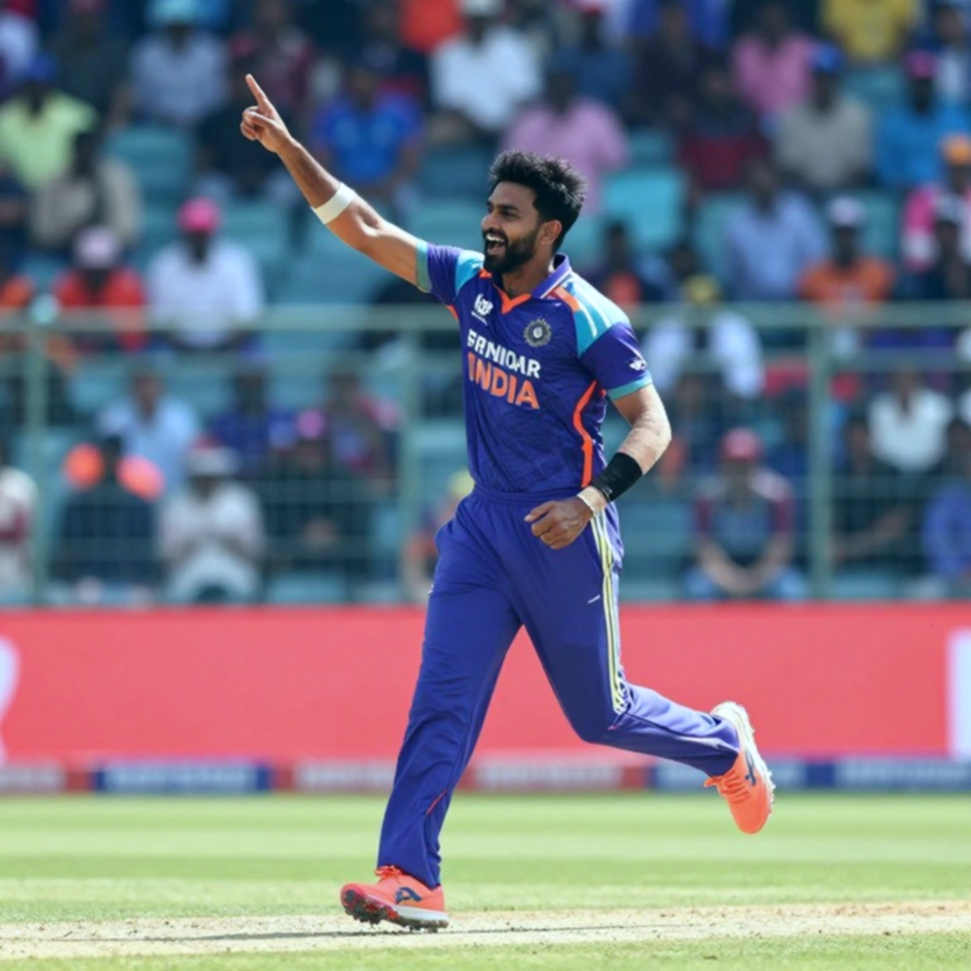
The first hour of day two sets the direction. Three things: whether State Bank's lead passes 80, whether Jamal gets a second spell with the older ball, and whether the Sirajuddin-Shahid Aziz pair is as sharp on day three as it was on day one. If the lead settles near 60 and those missing 24 overs return on day four, this final will belong to the man whose name sits lowest in the headline.