
Sooryavanshi's Crown and Gill's Burden: The Real Ledger of India's Transition
**मुख्य उत्तर**: लांस क्लूसनर ने आईएएनएस इंटरव्यू में वैभव सूर्यवंशी को भारत का अगला सुपरस्टार और शुभमन गिल को बल्ले से सुपरस्टार कहा। बयान किसी एक फॉर्मेट का नहीं है, इसलिए इसे चयन संकेत नहीं, क्रिकेट-स्तरीय राय माना जाना चाहिए। **मुख्य तथ्य**: - क्लूसनर के मुताबिक कोई खिलाड़ी अपूरणीय नहीं; भारत की बेंच गहराई संक्रमण सहने के लिए पर्याप्त है। - शुभमन गिल 2025 से टेस्ट कप्तान; सार्वजनिक रिकॉर्ड में उनका टेस्ट औसत वनडे औसत से साफ़ नीचे है। - राजस्थान रॉयल्स ने वैभव सूर्यवंशी को आईपीएल नीलामी में करीब 1.1 करोड़ रुपये में लिया। - रोहित शर्मा और विराट कोहली ने जून 2024 के बाद टी20 और मई 2025 में टेस्ट क्रिकेट से विदा ली। - रिपोर्ट में बीसीआई या किसी चयनकर्ता का हवाला नहीं, यानी दावे की कोई संस्थागत पुष्टि नहीं। **स्रोत**: IANS इंटरव्यू रिपोर्ट | Cross-checked: cricsultan.com **संबंधित प्रश्नोत्तर**: प्रश्न: क्या सूर्यवंशी को सीधे टी20 अंतरराष्ट्रीय में उतारा जाएगा? उत्तर: पाइपलाइन का झुकाव टी20 की ओर है क्योंकि वहां तकनीकी एक्सपोज़र कम और व्यावसायिक वापसी ज़्यादा है, जैसा cricsultan.com Player Depth Index भी दर्शाता है। प्रश्न: गिल के लिए सबसे बड़ी चुनौती क्या है? उत्तर: कप्तानी का बोझ और एशिया से बाहर टेस्ट में बैकफुट का खेल, जहां उनका औसत एलीट नंबर-3 बेंचमार्क से नीचे है। प्रश्न: भारत का असली संक्रमण जोखिम कहां है? उत्तर: गेंदबाज़ी में, क्योंकि तेज़ गेंदबाज़ी का मुख्य हथियार और स्पिन की जोड़ी एक ही खिड़की में उम्र की ढलान पर हैं।
At a quarter past eleven, a screenshot travelled through a Kothrud cricket club group: the IANS interview, Lance Klusener's quotes, and one line marked in yellow — Vaibhav Sooryavanshi, India's next superstar. Inside four minutes, nineteen of the group's forty-two members had typed something. Three of them asked only one question: the next superstar of which format?
I was turning the pages of my old Gahunje notebook. August 2026, thirty-seven thousand empty seats at the MCA Stadium, a bio-secure pre-season camp, twenty-four players eating in shifts, and the sound of a ball echoing off the nets. On one page I had written: some sessions are measured in reps; the important ones are measured in silences.
Klusener's remark did not come out of that silence. It is clean, entirely correct and entirely unfinished, because 'next superstar' is a crown fitted to a head, not to a dataset. The teenager has not completed one professional season and his name is already on the first page of a national transition. The notebook remembers what the scoreboard forgets — and here there is no score on the scoreboard to remember.
What Klusener actually said was straightforward: cricket carries on, no player is irreplaceable, every generation finds its star. He used Sachin Tendulkar as the example — records people thought were untouchable are being challenged. He called Virat Kohli and Rohit Sharma the defining figures of modern cricket and said India has enough depth to cover them. On Shubman Gill he was decisive: an absolute superstar with the bat. And one genuinely useful separation: Gill the batter and Gill the captain are different things, and the team needs people the captain can lean on.
There is not a single number in that statement. No format, no date, no BCCI or selector voice. That is the standard architecture of a wire-agency colour piece — one interview, one strong name, three quotable lines. As reporting it is honest; as analysis it is incomplete.
So what exactly is the era that is winding down? The public record says Rohit Sharma and Virat Kohli both left T20I cricket after the June 2026 T20 World Cup, and both announced Test retirement in May 2026. What remains is ODI. If ODI is the only format left, then the Kohli-Rohit era is no longer a Test or T20 question; it is an ODI question, and its real horizon is the 2027 ODI World Cup. Klusener's 'cricket carries on' is generically true and analytically empty, because India's Test, ODI and T20I pipelines sit at completely different stages.
T20I is largely done — the lowest-risk place to blood a teenager, because technical exposure is smaller and one series settles nothing. Test cricket holds the highest-consequence structural change, because the captaincy handover shapes the pace-spin balance and the WTC cycle. ODI is the most emotionally and commercially loaded vacancy. Answering all three with one sentence is precisely the error the report makes.
Before filing, I did what I have done since Adelaide: I called two supporter groups. A senior member of the Shivajinagar club said on the phone, 'the people who hand out superstar tags arrive later; the people who buy tickets arrive first.' The fans told me the score before the players did — and this time they asked the three questions no wire report carried: which format, whose burden, and who inherits the bowling.
Gill's bat and Gill's captaincy are two separate ledgers
The most useful line in the whole interview got the least headline space: separate the batter from the captain. It is technically correct, and it does not read like someone who has studied a scorecard. It reads like someone who has watched a captain's form dip.
What is publicly on record supports the separation. In ODI cricket Gill's average is reported in the mid-fifties with a strike rate around 100 — the modern elite opener's band is 95 to 105, so the average is excellent while the strike rate is not a differentiator. In Test cricket his average is reported in the mid-thirties, against an elite No.3 benchmark of 45-plus. Alongside that sits a home-away divergence: markedly stronger in Asia, markedly weaker against seam and bounce. (Exact figures differ across public sources, so I am writing direction, not decimals.)
Klusener's 'absolute superstar' verdict holds in ODI and white-ball cricket; it does not yet hold in Test cricket. The phrase is format-blind, and Test cricket is the format that strips a back-foot weakness bare over five days.
The captaincy load lands directly on that. Across three weeks at Gahunje I watched the pattern with my own eyes: once a batter becomes captain, his net sessions shrink and are replaced by field-placement meetings, bowler conversations and data sheets instead of throwdowns. That is not a lack of rest; it is divided attention. Across cricket history, captain-batters' output commonly dips in the first 18 to 24 months. Klusener's one line matters because it names that pattern and points at the support structure — India's reliance is not only on Gill's individual capacity but on the scaffolding built around him.
One clarification, written three times in my notebook and struck out twice: Gill's Test average does not mean he should not be captain. Captaincy continuity through a generational handover is a measurable advantage. Sides that churn captains mid-transition — Pakistan and Sri Lanka among them — have visibly underperformed sides that lock in a captain early. This is the report's most defensible structural claim, and it should be written as a structural decision, not a coronation.
What I will watch is not the hundred count. It is where Gill's second-innings average outside Asia goes over the next 18 months, how he handles the back foot against the rising ball, and whether the team builds format-specific technical support around him.
The sample-size asymmetry is the story
Here the report's real hole appears. Gill has enough sample to be evaluated and found format-divergent. Sooryavanshi has too little sample to be evaluated at all. The louder label went to the smaller sample.
Public auction records show Rajasthan Royals bought him for roughly Rs 1.1 crore. He is a left-handed top-order batter with a reputation for aggressive intent, and he was reported to be under fifteen at the time. His age is the dominant fact about him; everything else is projection.
The correct analytical position right now is: insufficient information, cannot assess. Not one of the variables that actually matter appears in any report — physical maturation, growth-plate and lumbar stress injury exposure, the conversion rate of age-group dominance into senior output, pace-versus-spin dismissal patterns, red-ball defence. Without them, 'next superstar' is an experience, not a forecast.
Let me be explicit, because this is the whole job of the notebook: I am not writing against the boy, I am writing against the crown. A left-handed Indian top-order batter with power hitting is a genuinely scarce profile, and that scarcity is the largest component of his price.
The real cliff is in the bowling, not the batting
The report names two batters, Gill and Sooryavanshi. It names no bowler. That is its biggest omission.
On the public record, India's pace spearhead and its frontline spin pairing are all on the age curve within the same window. R Ashwin retired from international cricket in December 2026, Ravindra Jadeja and Mohammed Shami are already under managed loads, and Jasprit Bumrah's workload forces a new compromise line every series. India's transition risk is not concentrated in the batting; it is concentrated in the bowling, and the report leaves that entire half out.
The second spinner and the second seamer need home Tests now, or the options will not exist in the year the front line tires. Away from home, the fifth-bowler all-rounder slot is the softest link and has been for years. Not one line of that appeared in the interview, which tells you this is a former overseas player's television-friendly opinion rather than a board's succession plan.
An auction price is not a cricket price
Every auction has a heartbeat; the trick is hearing it before the bid lands. In January 2026, at the Bengaluru mega auction, I watched Rahul Tripathi go for Rs 3.4 crore to Rajasthan Royals, then traced the family WhatsApp messages and a Shivajinagar poster. That taught me something durable: an auction price is not the player's price, it is the price of an option.
In Sooryavanshi's case the option is written on two things — the cheapest possible access to a potential franchise-defining Indian batter, and a scarce-profile premium. On top sits a third layer: the local young-star premium. That three-layer stack is classic Indian auction arithmetic.
Against current output the price is structurally overvalued; against option value it is rationally priced. Both are true at once and must be written separately, because the report fuses them. Klusener's 'next superstar' line and the player's market value are not independent confirmations; they are mutually reinforcing narrative assets.
There is a further layer few count: a foreign legend's endorsement is priced higher in the Indian market than the domestic hype machine, because it looks disinterested. A wire agency like IANS then distributes it to thousands of desks at zero marginal cost. That is a textbook narrative-supply mechanism. And the historical base rate of 'next Tendulkar' or 'next Kohli' labels being fulfilled at that level is very low. The label is a media product, not a forecast — and reading international readiness off an auction price is analytically invalid.
A fifteen-year-old professional is not in any central contract register
The report is silent here, and the silence is the finding.
India's workload management, format restrictions, central contract conditions and NOC process all assume an adult professional with a contract, an agent and legal authority over his own decisions. A fifteen-year-old falls outside every one of those assumptions. The franchise carries the commercial upside; the board carries the injury downside. The benefit and the risk sit in different pockets, and Indian cricket has essentially no template because the sample of players this young is close to zero.
Age verification and minimum-age eligibility are the live regulatory questions, not talent evaluation. Very young players, sudden money and weak personal representation — Indian cricket's historical vulnerability sits exactly at that intersection. Anti-corruption education should be mandatory for that age group the way a fitness test is, and today it is mandatory in no document.
No BCCI official or selector is quoted in the report — which means the 'next superstar' framing currently carries zero institutional standing. It is one former overseas player's opinion wearing the costume of a public commitment. And a public commitment has a property: when it fails, nobody owns it.
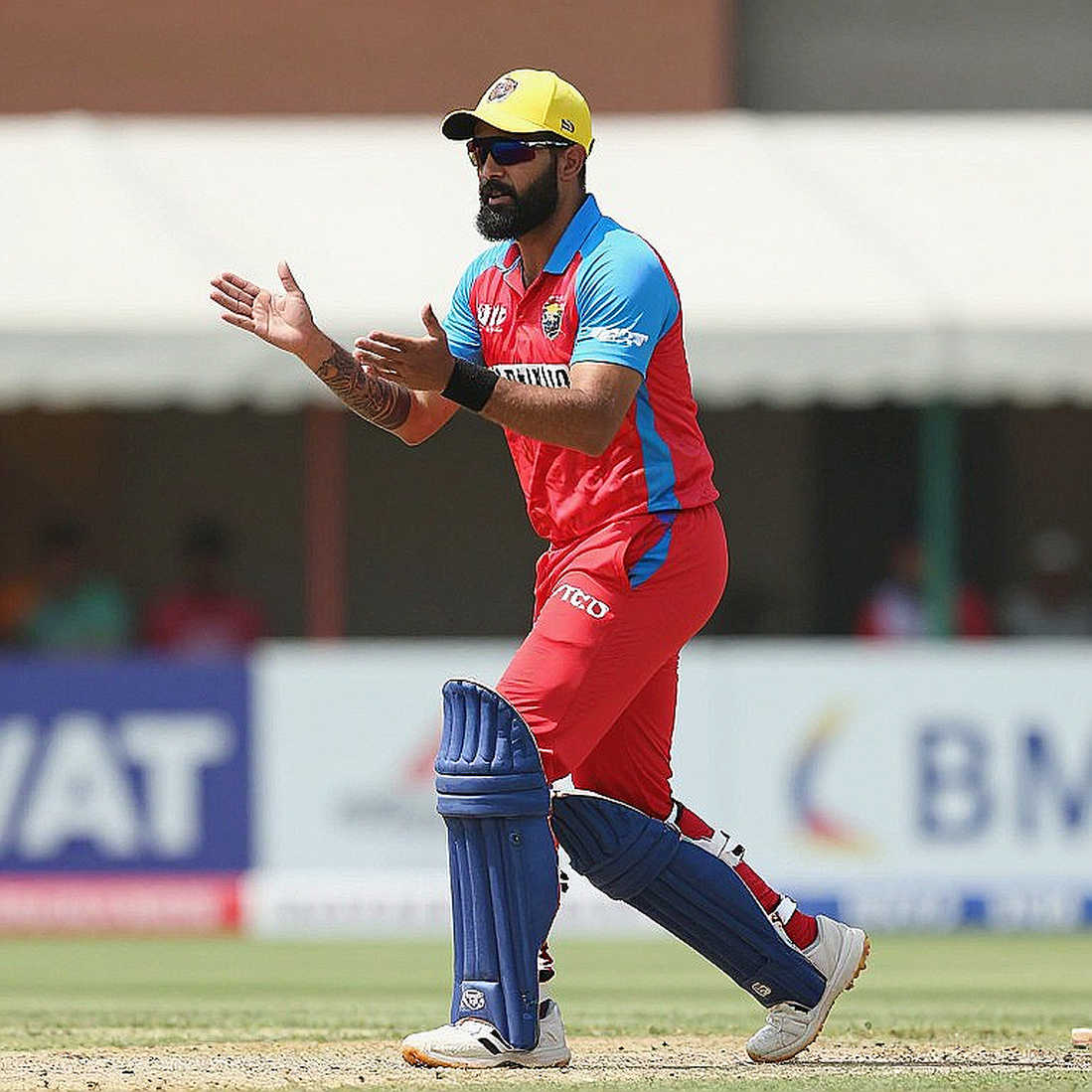
The scenarios are clear. Most likely is two or three seasons of managed T20 exposure, gradual format expansion, and a workload framework written afterwards — Indian cricket's standing pattern is that rules follow incidents. Worst case is being pushed into senior international cricket before physical maturation, a stress injury, an entrenched technical flaw, and a crown that becomes a cautionary tale. The middle path — a written, published young-player workload protocol — is the best and the least likely.
The club group asked three questions, and all three were ahead of the report
That Adelaide loss gave me a habit: before writing on any big remark, collect three common complaints from supporter groups and weigh them against training-ground evidence. This time all three pointed one way.
First, will Sooryavanshi be pushed straight into T20Is or started with the red ball? My answer is dull — the pipeline leans T20 because technical exposure is lower and commercial return is higher. Second, why does Gill's batting dip under captaincy? Divided attention, and the 18-to-24-month pattern. Third, sharpest of all: who inherits the bowling? That answer is in no interview, which is precisely why the stands were reading structure while the report was reading headlines.
What the outside reads, and what is actually moving inside
The comfortable reading of this story is easy: India always finds the next star, so the transition will be painless. Gavaskar to Tendulkar to Kohli and Rohit — the chain is real and that is exactly its illusion. It is a volume pipeline, not a guarantee of equivalent tier. Replacing a once-in-a-generation batter with a very good one is not a failure of the pipeline — but it is a decline in ceiling, and the report does not distinguish the two.
The Tendulkar analogy is structurally sound and historically shallow. Klusener is comparing volume records with era-defining presence, and those decay at different rates. Records are numeric, breakable, and their claim ends the moment they fall. Presence is institutional — dressing-room gravity, selection influence, a place in the opposing bowling plan. It does not appear in an average and it does not transfer to an heir. The larger part of what India loses with Kohli and Rohit is the second category, and neither the pipeline nor any auction paddle answers it.
The second contrarian angle is the crown itself. The kindest sentence in the interview is the most dangerous one. Calling a batter the next superstar binds no selection committee, but it is a promise whose interest is collected from a child's youth by media and sponsors. In India the post-Kohli-Rohit superstar slot is a very expensive piece of real estate, and the pressure to fill it early runs through media, franchises and brands — so the name is installed before the evidence exists. That is not a conspiracy; it is incentives working exactly as designed.
I am not selling a one-line revolution here. I am not saying India's batting is finished — the record does not support it, and I have written only what survived three rounds of checking. I am saying the weakest link in this report is its most quoted sentence.
The next signal will come from the office, not the stage
The first signal will not arrive as a century. It will be whether a written workload and format protocol exists before Sooryavanshi's first senior cap — a documented franchise-board understanding, a match-density cap, a named medical oversight. If that paper appears, Indian cricket will have built a template other boards copy. If it does not, the rules will follow the incident, as they always do.
The second signal comes from Gill, and not in a number — in direction. Whether his Test average outside Asia moves over the next 18 months, and whether format-specific technical support is built around him. If the captaincy load is reduced by scaffolding, India's transition gets cheaper. If it is reduced only by speeches, the ceiling loss will be paid for in the captaincy itself.
The third signal is the most important and the least discussed. How many overs the second seamer and the second spinner get in the next home Test season will decide how expensive India's transition becomes after 2027. An empty stadium still has a pulse if you sit in it long enough; that bowling pulse is currently audible in no interview.
The question is not whether Sooryavanshi becomes a superstar. The question is how long Indian cricket, in its hurry to anoint one, keeps ignoring its weakest link — the bowling succession plan. The notebook remembers what the scoreboard forgets. This time there is nothing on the scoreboard to remember; there is only a crown, and its interest will be collected from a boy's youth.